Water Filtration Systems for the Home: How They Work and What to Know
Introduction
Turn on a tap and the water looks simple, but what reaches the glass can carry minerals, disinfectant byproducts, sediment, or traces picked up along the way. Home filtration matters because water quality depends not only on the local utility or well, but also on old pipes, plumbing fixtures, and the job each household expects water to do. A good system can improve taste, protect appliances, and target specific contaminants without guessing. That makes informed selection far more useful than buying the most expensive filter on the shelf.
Article Outline
This guide moves from the basics to the practical details homeowners usually need before buying or upgrading a filtration system.
- Section 1 explains why home water quality varies and which contaminants people most often try to address.
- Section 2 breaks down the main treatment technologies and shows how each one works.
- Section 3 compares the most common system types, from pitchers to whole-house units.
- Section 4 covers installation, maintenance, operating cost, and third-party certification.
- Section 5 offers a decision framework to help households choose a system that fits their water source, budget, and priorities.
1. Why Home Water Quality Can Differ So Much
Water entering a home may have traveled through a highly regulated municipal treatment plant or come directly from a private well, yet either source can still present household-specific issues. Municipal utilities in many countries must meet legal standards for contaminants, and in the United States public systems are overseen under federal and state rules. That does not mean every glass of water tastes great, nor does it mean every plumbing system is problem-free. Water can pick up sediment from aging mains, chlorine flavor from disinfection, or metals from old household pipes and fixtures. A home built decades ago may have plumbing materials that create risks a treatment plant never intended to send downstream.
Private wells are different. They are not usually monitored by a utility, which means testing falls to the homeowner. In those homes, the question is not just “Is the water clear?” but “What is actually dissolved in it?” Nitrate, iron, manganese, sulfur odor, bacteria, arsenic, hardness, and sediment can all appear depending on geology, nearby land use, and well construction. Water can look perfectly clean while still carrying contaminants that need attention. That quiet mismatch is one reason filtration is so often misunderstood: appearance is a poor laboratory.
Most households explore filtration for one or more of these reasons:
- better taste and odor, often linked to chlorine or sulfur compounds
- reduction of lead or other metals from plumbing components
- sediment control for cloudy water or to protect appliances
- scale reduction in hard water areas
- specific contaminant concerns such as PFAS, nitrates, or certain microbes
It is also important to separate aesthetic issues from health-related ones. Hard water, for example, can leave spots on dishes, shorten the life of heating elements, and form scale in kettles, but hardness itself is usually treated as a nuisance problem rather than a direct safety hazard. By contrast, lead, microbial contamination, or high nitrate levels can require focused action. The wise starting point is testing: a recent water quality report for city water, or a certified lab test for well water and any home with specific concerns. Without that information, shopping for a filter can feel like trying to choose medicine in the dark.
In practical terms, a filter should be chosen for a defined purpose. If the water tastes like a swimming pool, activated carbon may help. If the issue is dissolved minerals causing crusty faucets, a softener or reverse osmosis unit may be more relevant. If microbial contamination is possible, a mechanical filter alone will not do the full job. The story of home water treatment begins, therefore, not with a product box, but with a question: what exactly are you trying to fix?
2. How Home Water Filtration Technologies Actually Work
Water treatment sounds mysterious until the major technologies are laid out side by side. Most home systems rely on a small set of physical and chemical principles: straining, adsorption, ion exchange, membrane separation, disinfection, or phase change. Once you understand those mechanisms, product descriptions become easier to decode and marketing language loses some of its fog.
The simplest method is mechanical filtration. Think of it as a very fine barrier that catches particles as water passes through. Sediment filters are rated in microns, a unit used to describe particle size. A coarse filter may catch sand or rust flakes, while a finer one can trap much smaller particles. This is useful for cloudy water and as a prefilter that protects more specialized equipment downstream. Mechanical filters are important, but they do not automatically remove dissolved substances such as lead ions, chlorine, or salts. A screen is not a chemistry set.
Activated carbon is one of the most common technologies in pitchers, faucet units, refrigerator cartridges, and many under-sink systems. Carbon works mainly through adsorption, meaning certain compounds stick to the large internal surface area of the carbon media. It is especially helpful for improving taste and odor and can reduce chlorine and many volatile organic compounds. Some carbon blocks are also certified for lead reduction or cyst reduction, depending on design. Performance depends on contact time, media quality, flow rate, and certification. A tiny cartridge pushed too hard can promise more than physics allows.
Ion exchange is the engine inside most water softeners. Resin beads swap hardness minerals such as calcium and magnesium for sodium or potassium ions. This process helps prevent scale buildup on pipes, water heaters, and fixtures. Special resins can also target contaminants like nitrate in certain applications. Softening changes water behavior very effectively, but it is not the same thing as broad filtration for chemicals or microbes.
Reverse osmosis, often called RO, uses a semi-permeable membrane to separate water from many dissolved solids. Water is pushed through the membrane under pressure, leaving a portion of concentrated waste behind. RO can reduce a wide range of contaminants, including many salts, heavy metals, and some emerging substances, but it also tends to work slowly and may waste water in the process. Many under-sink RO systems pair the membrane with sediment and carbon stages so that each layer handles a different job.
Other technologies fill specialized roles:
- Ultraviolet treatment uses UV light to inactivate many microorganisms, but it does not remove particles or chemicals.
- Distillation boils water and condenses the steam, separating many contaminants, though it uses more energy and is slow.
- Specialty media such as catalytic carbon, manganese dioxide, or alumina may target sulfur, iron, arsenic, or fluoride in certain systems.
The key lesson is that no single technology is perfect for every home. Carbon is excellent for taste and many chemicals, but not a cure-all for dissolved minerals. UV is strong against microbes, but helpless against lead. Softeners tame scale, yet do little for chlorine flavor. A good system often combines stages like instruments in an orchestra, each playing a different note to produce a cleaner final result.
3. Comparing the Main Types of Home Water Filtration Systems
Home water filters differ not only by technology but also by where they are installed and how much water they treat. The broad divide is between point-of-use systems, which treat water at a specific tap or appliance, and point-of-entry systems, which treat most or all of the water entering the house. The best choice depends on whether your goal lives in the kitchen glass, the shower, the washing machine, or everywhere at once.
Pitcher and gravity-fed countertop filters are often the easiest entry point. They are inexpensive, portable, and simple to use, making them popular for renters, dorm rooms, and households that mainly want better-tasting drinking water. Their limitations are equally clear: low capacity, slow filtration speed, and narrower treatment scope. They are not designed to protect plumbing, and they can become inconvenient for large families that fill them all day long.
Faucet-mounted units and basic countertop devices offer more convenience at the sink. They often use carbon media and can improve taste while reducing certain contaminants if properly certified. Still, flow rate is usually lower than an unfiltered tap, and the device is tied to one fixture. These systems are a practical compromise when plumbing changes are not desirable.
Under-sink systems occupy the middle ground between convenience and performance. Many use multi-stage filtration, and reverse osmosis models are especially common for drinking and cooking water. They provide cleaner-looking installations than counter units and can deliver higher-capacity treatment. On the other hand, they require cabinet space, periodic service, and sometimes a dedicated faucet. If the kitchen is the household’s water headquarters, under-sink filters often make strong sense.
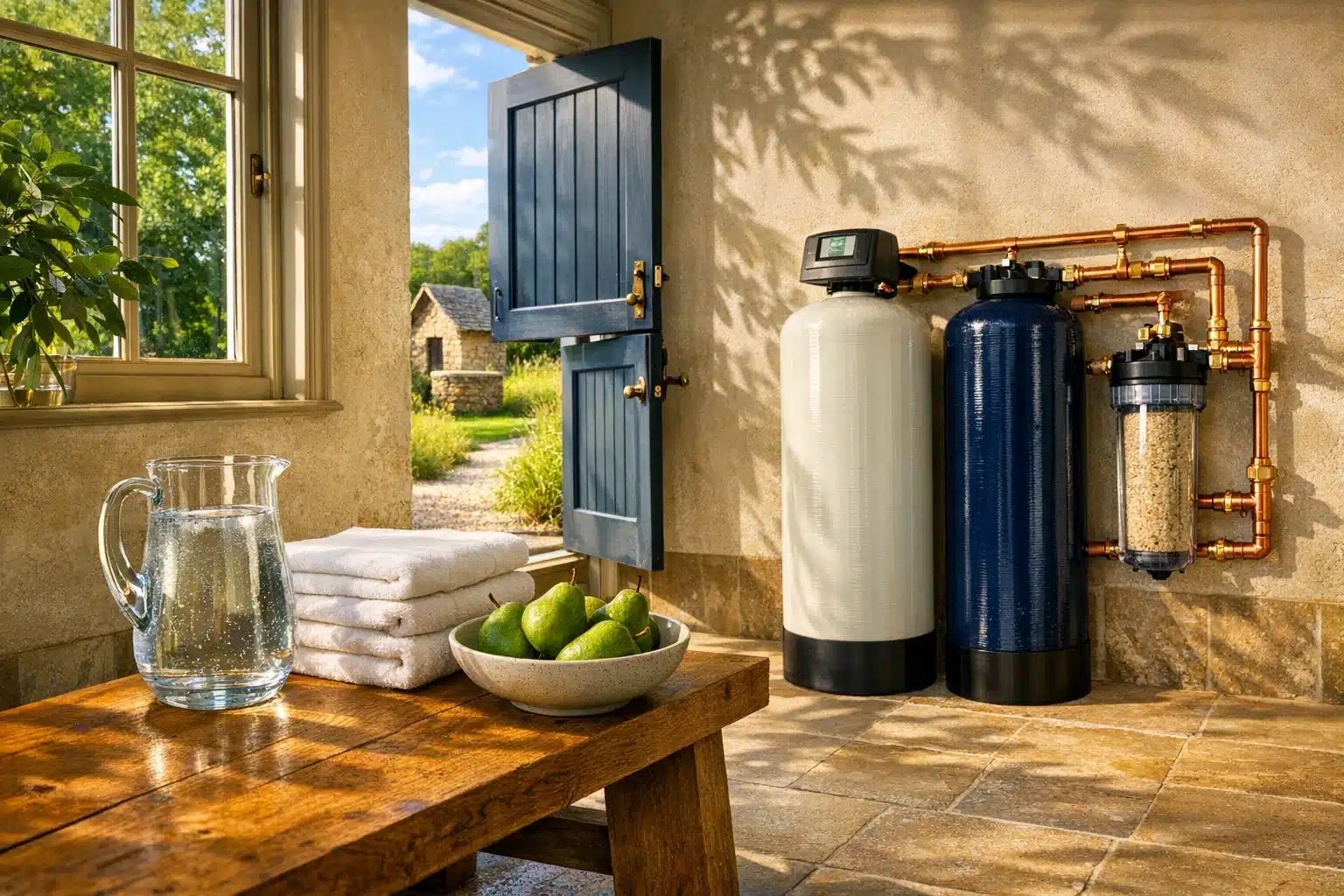
Whole-house systems treat water as it enters the home. These are ideal when the concern affects more than drinking water, such as sediment, hardness, iron staining, sulfur odor, or chlorine throughout the property. A whole-house sediment filter can protect fixtures and appliances; a softener can reduce scale everywhere; a carbon tank can improve taste and odor across many taps. Yet whole-house treatment is usually more expensive, needs more installation space, and is rarely the most economical way to produce ultra-purified drinking water alone. Many households pair a whole-house system with an under-sink drinking-water filter for this reason.
Here is a useful way to compare the main formats:
-
Pitcher or dispenser: low cost, low capacity, good for small-scale taste improvement.
-
Faucet or countertop: moderate convenience, limited treatment reach, suitable for apartments.
-
Under-sink: strong balance of capacity and performance for drinking and cooking water.
-
Whole-house: broad protection for plumbing and general household use, higher upfront cost.
There is no universal winner. A city apartment with acceptable water but unpleasant taste may need only a compact carbon filter. A rural home with sediment, bacteria risk, and hardness may require layered treatment at the entry point plus targeted polishing at the kitchen sink. In other words, the smartest system is not the largest one; it is the one placed at the right point in the water’s journey.
4. Installation, Maintenance, Certification, and Real-World Cost
A water filter is not a one-time purchase that works forever in silence. Every system has an operating rhythm: cartridges clog, media becomes exhausted, membranes age, UV lamps weaken, and softeners consume salt. A thoughtful buying decision therefore looks beyond sticker price and asks a more revealing question: what will this system cost and require over the next three to five years?
Installation ranges from delightfully simple to definitely-plumber territory. A pitcher needs no tools. A faucet-mount typically snaps into place. Under-sink systems may require connecting to the cold-water line, drilling a hole for a dedicated faucet in some cases, and allowing space for cartridges or a storage tank. Whole-house systems often involve pipe cutting, shutoff valves, drain connections, bypass loops, and enough floor area to service the unit comfortably. If a home has a well, some systems may also need coordination with pressure tanks, pumps, or disinfection equipment.
Maintenance is where many filters quietly succeed or fail. A neglected cartridge can lose effectiveness or reduce flow so much that people stop using it. Replacement schedules vary by system and water quality. Sediment filters may need changing every few months in dirty-water conditions. Carbon filters often run for a few months before replacement, though larger systems can last much longer. Reverse osmosis membranes may last several years, while prefilters and postfilters usually require more frequent attention. UV lamps often need annual replacement because the light output declines over time even if the lamp still glows.
Third-party certification matters because it helps verify what a product has been tested to reduce. In the consumer market, NSF/ANSI standards are often the most useful shorthand. Common examples include:
-
NSF/ANSI 42 for aesthetic effects such as chlorine taste and odor
-
NSF/ANSI 53 for certain health-related contaminant reductions, including lead on some certified products
-
NSF/ANSI 58 for reverse osmosis systems
-
NSF/ANSI 401 for reduction claims involving some emerging contaminants on qualified products
Certification does not mean a system removes everything; it means the product was tested for specific claims under set conditions. That distinction is crucial. A filter certified for chlorine reduction should not be assumed to handle arsenic or bacteria unless those claims are also listed.
Costs vary widely, but broad patterns are easy to see. Pitchers and faucet units usually have low upfront prices but recurring cartridge costs. Under-sink filters cost more initially, yet often deliver lower cost per gallon for regular users. Whole-house units can range from moderate to substantial investment, especially when professional installation is included. Reverse osmosis systems may add water waste and slower production to the cost equation, while softeners include salt and maintenance expenses. In short, the cheapest filter to buy is not always the cheapest filter to live with, and the most impressive brochure is not a maintenance plan.
5. How to Choose the Right System for Your Home and Priorities
Choosing a water filtration system becomes easier when the process starts with evidence, not anxiety. Many buying mistakes happen because people shop by category instead of by problem. They buy a softener when they need lead reduction, or a carbon filter when the real issue is bacterial safety. The better approach is to match source water, household habits, and target contaminants to the treatment methods most likely to work.
Start with the water source. If you use municipal water, read the annual water quality report and remember that it describes the supplied water, not necessarily what your home’s plumbing contributes afterward. Older homes may need special attention to lead risk at the tap. If you use a private well, schedule lab testing and refresh it periodically, especially after flooding, changes in taste, or plumbing work. Testing provides the map; the filter is the route.
Next, define your main goal. This seems obvious, but it is often where clarity arrives. Ask whether you want to:
-
improve taste and odor for drinking water
-
reduce a specific contaminant such as lead, nitrate, arsenic, or PFAS
-
manage hardness and protect appliances from scale
-
address sediment, staining, sulfur smell, or iron in well water
-
treat the entire house rather than one sink
Then consider daily use. A single person in a rental may be perfectly served by a certified pitcher or countertop unit. A family that cooks heavily, fills bottles, and wants convenience may prefer an under-sink system. A whole-house unit is usually worth examining when water problems affect bathing, laundry, dishwashing, plumbing, or multiple fixtures. For many households, the most practical design is layered treatment: sediment control or softening at the entry point, then higher-performance filtration at the kitchen tap.
Budget should include both purchase price and upkeep. A low-cost system with frequent cartridge changes can become expensive over time, while a sturdier unit may pay off if consumption is high. Also think about water pressure, available cabinet or utility-room space, wastewater from reverse osmosis, and whether you are comfortable doing maintenance yourself. If not, professional service may be worth the added cost.
Finally, read claim language carefully. Look for specific contaminant reductions backed by certification, not vague promises like “pure water” or “advanced technology.” If someone in the home has a health concern, an infant is consuming the water, or the source is uncertain, testing and professional advice are wise steps. Water treatment is not a magic trick; it is a matching exercise. When the match is right, the result feels almost invisible in the best way possible: the water tastes better, the kettle scales less, the fixtures stay cleaner, and the household stops thinking about the tap with suspicion.
Conclusion for Homeowners
For most readers, the smartest path is simple: test first, define the problem clearly, and choose a system with certified performance for that exact job. If your main concern is taste, a carbon-based point-of-use filter may be enough. If the issue reaches beyond the kitchen, such as hardness, sediment, iron, or whole-home chlorine, entry-point treatment deserves attention. Households on private wells should be especially methodical, because water quality can change and responsibility rests with the owner. A good filtration setup does not need to be flashy; it needs to be appropriate, maintained on schedule, and honest about what it can and cannot do.