Learn more about Barbecue equipment
Outline:
– Fuel, Form, and Materials: The Heart of Your Grill
– Heat, Airflow, and Cooking Zones: Control Beats Guesswork
– Tools and Accessories That Actually Help
– Safety, Maintenance, and Durability
– Conclusion: Matching Equipment to Your Space, Food, and Budget
Fuel, Form, and Materials: The Heart of Your Grill
Barbecue equipment is more than metal and fire; it’s a set of choices that shape flavor, timing, and the way you like to cook for friends and family. The primary decision is fuel. Charcoal excels at high-heat searing and smoky complexity, while gas thrives on convenience and quick temperature control. Pellet systems feed compressed hardwood sawdust to automate low-and-slow cooking with steady heat. Electric units suit balconies and strict fire codes, trading live flame for clean operation. Understanding how each relates to your space, schedule, and recipes will help you build a kit that truly serves your table.
Fuel profiles in brief:
– Charcoal: Intense radiant heat and classic smoke; typical searing zones reach 500–700°F after a 15–20 minute preheat. Lump burns hotter and faster; briquettes offer steadier output. Expect ash cleanup and hands-on vent control.
– Gas (propane or natural gas): Fast start, precise knobs, and easy two- or three-zone setups. A 20 lb propane cylinder contains roughly 430,000 BTUs; moderate cooks (25,000–40,000 BTU/h) can run multiple sessions per tank.
– Pellets: Thermostatic control for stable 180–450°F cooks; wood flavor with minimal babysitting. Consumption ranges roughly 1–3 lb/hour depending on temperature and weather.
– Electric: Compact and straightforward, ideal where flames are restricted; great for gentle cooks and weeknight meals, less suited to high-heat searing.
Grill form factor affects heat circulation and usable space. Kettle and kamado shapes promote efficient convection under a dome, making indirect roasts reliable. Barrel and offset designs increase distance between fire and food to nurture smoke flavor on larger cuts. Flat-top griddles deliver uniform contact heat for smash burgers and fajitas, sacrificing smoke for control. Portables prioritize weight and foldability for parks or tailgates. Materials matter too: thick-gauge steel or ceramic retains heat better; enameled coatings resist rust; stainless steel resists corrosion; cast-iron grates hold heat impressively but appreciate regular seasoning. Pay attention to cooking area (square inches), lid height for whole chickens or rib racks, and sturdy wheels if you plan to move the unit. These straightforward details quietly determine how confidently you’ll cook everything from weeknight skewers to all-day briskets.
Heat, Airflow, and Cooking Zones: Control Beats Guesswork
Taste begins with temperature control. Grills heat food through a blend of radiant energy (glowing coals or burners), convection (hot air circulating under the lid), and conduction (contact with grates or griddles). Your job is to shape these forces with zones and airflow. A simple two-zone layout creates a hot side for searing and a cooler side for finishing; it’s the backyard equivalent of a professional kitchen’s sauté and resting stations. Three zones add a medium area to broaden options, useful for delicate fish or thick pork chops that benefit from gradual heat.
Zone setups that work:
– Charcoal: Bank coals to one side for direct heat; leave the other side coal-free for indirect. Adjust bottom intake to feed the fire and top exhaust to guide smoke and stabilize temperature. Small vent moves can translate to 10–25°F shifts after a few minutes of equilibrium.
– Gas: Light all burners for preheat; drop one or two to low or off for indirect space. Heat flux around 80–100 BTU per square inch is a commonly cited target for strong performance; rather than chase a single number, test with a toast test—bread browning patterns reveal hot and cool spots.
– Pellets: Use controller setpoints and heat deflectors to steer airflow; higher fan speeds and auger rates produce cleaner-burning profiles at grilling temperatures, while lower settings and smoldering pellets enhance smoke at 200–250°F.
Accessories that shape heat include diffusers, baffles, and water pans. Diffusers even out burner hotspots; baffles protect proteins from direct flame while still transferring energy; water pans add humidity, which moderates temperature swings and can reduce evaporative drying during long cooks. Lid thermometers often sit high in the dome and may read cooler or hotter than grate level; a grate probe shows what the steak actually “feels.” Thermal mass—the thickness of grates, firebox walls, or ceramic—governs recovery time after opening the lid. Heavy components lose less heat when you flip a steak, which means steadier results. Aim to preheat thoroughly (10–20 minutes depending on fuel), keep the lid closed to favor convection, and let vents do the fine-tuning. Control is cumulative: small choices in setup stack into consistent doneness and repeatable flavor.
Tools and Accessories That Actually Help
A great grill is only part of the equation; smart accessories turn heat into outcomes you can predict. Start with thermometry. An instant-read thermometer gives you the truth about doneness within a few seconds, and a leave-in probe tracks both ambient grill temperature and the internal temperature of larger cuts. As general food-safety guidance, many cooks target 165°F internal for poultry and 145°F followed by a rest for whole-muscle pork, recognizing that carryover heat can add several degrees after pulling. Calibrate thermometers periodically with a quick ice-water (32°F/0°C) and boiling-water check (adjust for altitude) to keep readings honest.
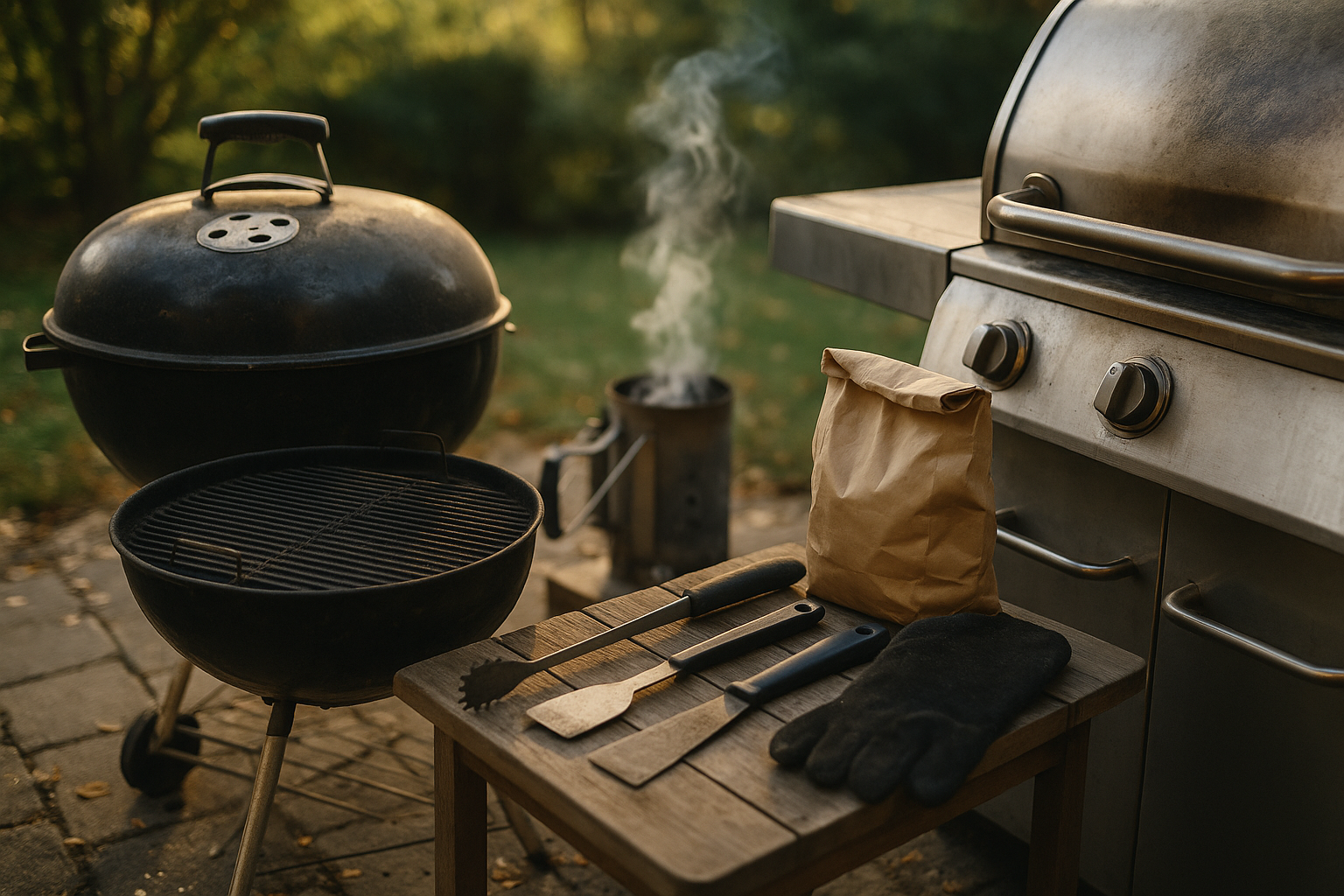
Essential handling tools: long, sturdy tongs for flipping without piercing; a wide spatula with a tapered edge for delicate fish and smash burgers; and heat-resistant gloves for rearranging grates or chimney starters. For charcoal, a chimney starter speeds ignition without lighter fluid, producing cleaner flavor in roughly 10–15 minutes. A slim ash tool helps you move coals precisely. For gas, a simple foil or steel drip pan under fatty cuts can prevent flare-ups while catching flavorful drippings for sauces.
Grate care matters. Choose a brush design that avoids shedding sharp wires; many cooks prefer coil-style scrubbers, nylon options rated for hot surfaces, or a solid scraper. Cast-iron grates reward you with trademark grill marks and strong searing, but they like a thin oil film after cleaning to stave off rust. Stainless grates are lower-maintenance and easier to scrub. Consider modular surfaces: a reversible griddle plate for breakfast spreads, a perforated vegetable pan to prevent cherry tomatoes from falling through, or a pizza stone to harness even, dry heat for crisp crusts. Organization helps too—magnetic hooks for tools, a small tray for salt and pepper, and a clean landing zone for cooked food reduce last-minute scrambling.
Useful upgrades:
– A rotisserie attachment transforms whole chickens and roasts with self-basting magic and even browning.
– A rib rack doubles capacity for ribs or wings during game day.
– A fish basket supports thin fillets that might otherwise tear on the turn.
Each add-on should earn its space by solving a problem you face regularly. If an accessory doesn’t save time, improve safety, or unlock new techniques, it’s probably clutter.
Safety, Maintenance, and Durability
Good barbecue habits protect people and gear alike. Place grills on a level, non-combustible surface with ample airflow; many fire departments recommend keeping units several feet—often 10 feet or more—from exterior walls, railings, and overhangs. Keep a clear zone free of leaves, mulch, or low-hanging branches. With gas, perform a quick leak test any time you swap cylinders or disturb fittings: brush soapy water on connections and watch for bubbles that indicate escaping gas. Always open the lid before lighting to prevent flashback. For charcoal and pellets, manage ash carefully; embers can remain hot for hours, so store cooled ash in a metal container with a tight lid before disposing.
Grease fires demand calm. Do not use water. Close the lid and vents (if safe to do so) to starve oxygen, turn off gas supply if applicable, and keep a multipurpose ABC extinguisher nearby for emergencies. A box of baking soda is a simple backup for small grease flare-ups. Indoors is off-limits for charcoal or gas appliances due to carbon monoxide risk; even open garages can trap dangerous gases, so keep live-fire cooking outside with clear ventilation.
Routine maintenance extends service life and keeps food tasting its best. After each session, burn off residue for a few minutes, then scrub grates while still warm. Empty grease trays before they overflow. Every few weeks, deep-clean the firebox: scrape carbon, check burner ports for clogs, and inspect igniters. Surface rust is common on outdoor metal; a light sanding and a thin coat of high-heat paint on external steel (not grates) can slow corrosion. Ceramic or enameled components usually prefer gentle, nonabrasive cleaners. Protective covers help, but make sure gear is fully cool and dry before covering to avoid trapped moisture. Store propane cylinders upright in a shaded, well-ventilated area; keep pellets dry in sealed containers, as moisture ruins combustion quality; and store charcoal away from humidity so it lights consistently.
A simple safety checklist pays dividends:
– Stable placement, generous clearance, and clear surroundings.
– Leak checks after fuel changes; lid open on ignition.
– Grease management, proper ash disposal, and an extinguisher within reach.
– Regular cleaning and seasonal inspections of grates, burners, and seals.
With care like this, your equipment stays reliable—and your gatherings stay relaxed.
Conclusion: Matching Equipment to Your Space, Food, and Budget
Buying barbecue equipment is easier when you anchor decisions to how you actually cook. Start with space and rules. Compact balconies often demand electric or small gas setups with modest cooking areas; a lidded unit still allows indirect heat for roasts. Yards with room to spare can support a charcoal kettle for searing and smoking, a pellet cooker for automated low-and-slow, or a gas grill for weeknight speed. If you love steaks and thin cuts, prioritize high-heat capability and thick grates. If you’re drawn to brisket, pork shoulder, or ribs, steady 225–275°F performance and generous indirect space matter more than raw top-end heat.
Budget unfolds over time, not just at checkout. Fuel costs vary: a 20 lb propane cylinder (about 430,000 BTUs) can support several moderate cooks; pellet use typically ranges 1–3 lb/hour from 225–450°F, so a 20 lb bag yields roughly 6–15 sessions; charcoal needs depend on grill size and airflow, but many medium cooks burn 2–4 lb. Prices shift by region and season, so treat these as ballpark figures. Think about replacement parts too—grates, burners, gaskets, and igniters are wear items. Read specifications like cooking area, temperature range, grate material, and body thickness; they often predict performance better than glossy photos.
A quick decision framework:
– Identify your three most-cooked meals and buy for those outcomes first.
– Choose a fuel that fits your schedule (hands-on vs. set-and-forget) and storage space.
– Demand two-zone capability in any grill; it’s the foundation of control.
– Invest in reliable thermometry and safe handling tools before decorative add-ons.
– Plan a storage and maintenance routine you’ll actually follow.
For enthusiastic home cooks, a well-regarded, mid-size gas grill plus a charcoal kettle is a versatile pairing: weekday efficiency with weekend smoke and sear. Apartment dwellers can assemble an outstanding electric setup with a compact griddle plate and a sturdy probe thermometer for precise results without open flame. Wherever you land, prioritize control, safety, and durability over flash. Do that, and your equipment will become a dependable partner—quietly elevating everything from Tuesday vegetables to celebratory rib roasts—season after season.