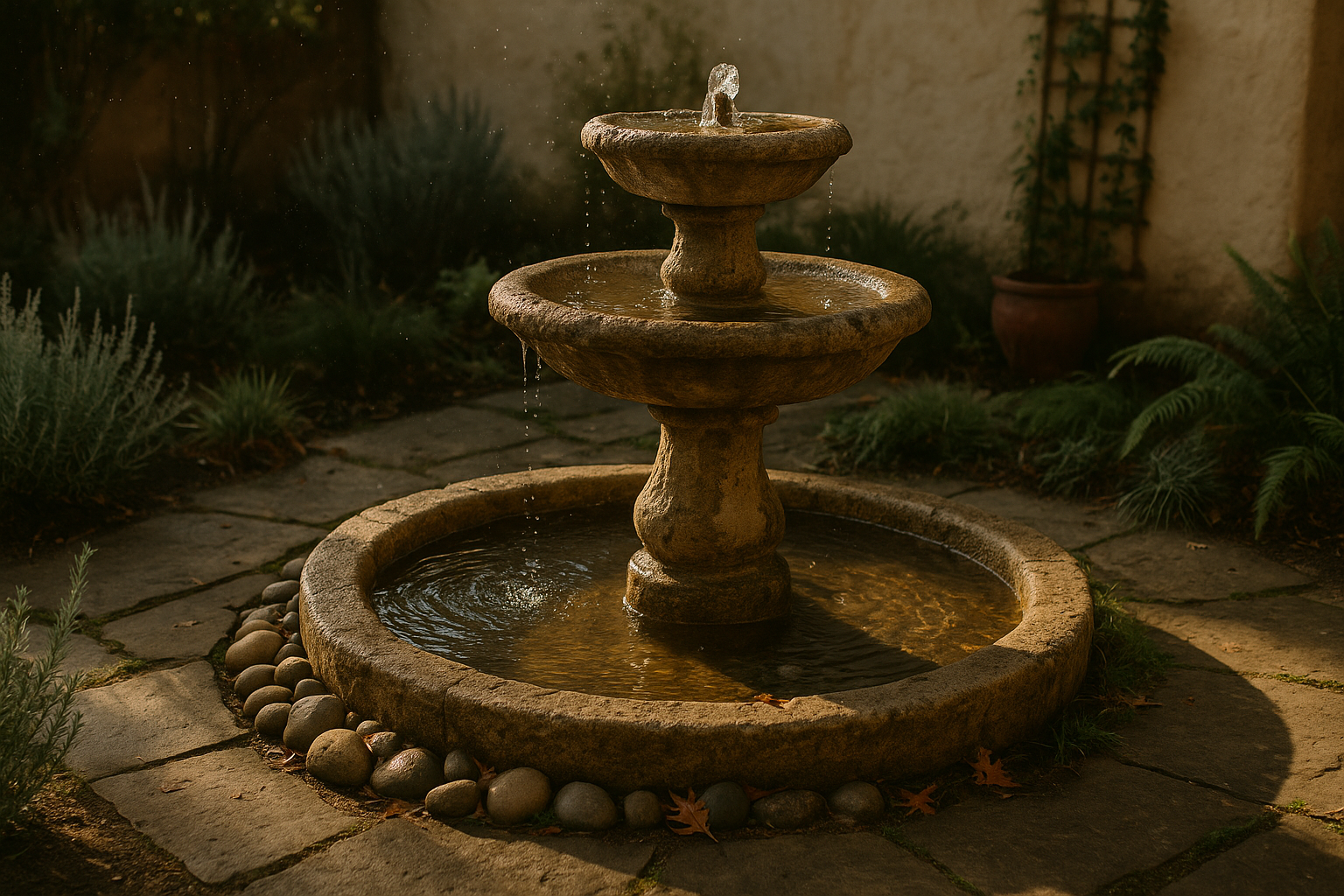
Learn more about Garden Fountain
Introduction & Outline: Why Garden Fountains Matter
Water changes how a space feels. The soft rush of a spillway can mask street noise, create a focal point, and even coax birds to visit. In warm months, evaporation from a fountain subtly cools nearby air; in small courtyards, that microclimate shift is noticeable during late afternoons. For many homeowners, a fountain is more than décor: it is a daily ritual—flipping on the pump, hearing the first trickle, and letting the garden’s pace set the evening’s tone.
Beyond mood, there are practical reasons to consider a fountain. Recirculating systems are efficient; once filled, they primarily need top-ups to offset evaporation, which varies with sun, wind, and water exposure. Shallow basins with high splash lose more, while deep bowls with gentle flow lose less. When paired with native planting, a water feature can support birds and pollinators, turning a quiet corner into a small habitat. Anecdotally, landscape professionals note that a well-placed fountain can enhance curb appeal and perceived property value by adding movement where most elements are still.
To help you plan with clarity, here’s the outline for this guide:
– Types and materials: forms, durability, weight, and cost trade-offs
– Design and placement: scale, acoustics, and sightlines
– Installation, power, and water management: safe wiring, plumbing, and pump sizing
– Maintenance and seasonal care: cleaning, winterization, and common fixes
A quick note on expectations. Fountains are straightforward but not trivial: level bases matter, electrical safety matters, and water chemistry matters. With a little planning—think of it as a weekend project plus a few seasonal check-ins—you can have dependable performance for years. Throughout this guide, you’ll find plain-language comparisons, rules of thumb, and examples that balance aesthetics with function. The goal is not just to inspire, but to equip you to choose confidently and maintain with ease.
Types and Materials: Matching Form to Function
Choosing a fountain begins with form. Freestanding tiered designs create vertical presence and a classic profile; they suit entry courts and formal beds. Wall-mounted scuppers and spouts save floor space and turn blank masonry into living surfaces. Disappearing or “pondless” bubblers send water over stone into a hidden basin, minimizing standing water while emphasizing texture and sound. Birdbath fountains keep things compact and wildlife-friendly. Pond fountains aerate larger bodies of water, though they require more volume and power. Each form shapes sound, splash pattern, and maintenance rhythm.
Materials define weight, weathering, and longevity:
– Carved stone (granite, basalt, limestone): dense and durable, with authentic textures; heavy, so they demand a stable base and careful placement
– Cast concrete: versatile shapes and substantial feel; sealants help resist staining and freeze–thaw stress
– Ceramic: rich glazes and color; typically lighter than stone but sensitive to hard freezes if water infiltrates
– Metals (copper, bronze, stainless steel): crisp edges and evolving patina; copper and bronze darken attractively, stainless stays cleaner but shows water spots
– Resin/fiberglass composites: light, affordable, and easier to move; thinner walls can amplify pump vibration unless stabilized
Think about scale and flow rate together. A small bowl often sings with 50–150 gallons per hour (GPH), a medium feature with 200–500 GPH, and larger multi-tier pieces may run 800–1,500 GPH or more. Height matters: the pump must overcome “head,” the vertical lift plus friction in tubing; undersizing leads to weak sheets and noise from sputtering. On the other hand, oversizing can cause splash loss and constant top-ups. A good rule is to match pump curves to your intended head height and target 1–2 full volume turnovers per hour for contained basins.
Durability comparisons are straightforward: stone and properly reinforced concrete tend to outlast lighter composites, though they cost more to ship and set. In freeze-prone climates, any material with micro-cracks can spall if water freezes inside, so seasonal draining is wise. For finishes, expect honest wear: mineral rings on darker surfaces, green biofilms on perpetually damp edges, and gentle patina on metals. Many owners embrace this weathering as character, especially when the fountain sits among grasses, salvias, or ferns that soften lines and echo the movement of water.
Design and Placement: Scale, Sound, and Setting
Design begins with intention. Do you want a quiet murmur near a reading chair, a lively backdrop for outdoor dining, or a statement piece at the end of a path? Match the fountain’s size to the room it inhabits. In a narrow courtyard, a tall vertical piece can feel grand but risks overwhelm; a modest bowl with a centered bubbler often reads as calm and proportional. In larger lawns or patios, tiered or multi-spout features hold their own and draw the eye from across the space.
Acoustics deserve deliberate thought. Sound comes from water height, volume, and landing surface. A 2–4 inch drop yields a gentle trickle; 6–12 inches produces a clear, lively note; taller falls can verge on white noise. Hard basins amplify brightness, while pebbled splash zones deepen tone. Wind exposes another variable: a tall, arcing sheet looks dramatic on calm mornings but can atomize in afternoon gusts, increasing splash loss. If your climate is breezy, consider recessed spill edges and wind-sheltered placements near hedges or walls.
Sun and shade affect algae growth and evaporation. South-facing, all-day sun invites more algae and faster water loss; partial shade keeps water cooler and clearer. If you love sunlit sparkle, balance it with plant shade midday or a deeper basin to stabilize temperature. Also, think sightlines: position the feature where it is seen from key vantage points—kitchen sink, favorite chair, entry path—rather than only from the patio.
Before committing, test scale. Lay out the footprint with a garden hose or cardboard template and stand in likely viewing spots. Listen to temporary water sounds by pouring from a bucket at different heights into a tub filled with pebbles; it’s a low-tech way to preview tone. Finally, map logistics:
– Access to a safe, code-compliant outdoor receptacle on a GFCI circuit
– A discreet route for low-voltage cable or conduit
– A level, compacted base that resists settling through wet seasons
– A plan for topping up water: nearby spigot, rain barrel, or captured AC condensate
These small decisions—drop height, background planting, and practical access—turn a nice object into a cohesive, daily-use experience that invites you outside more often.
Installation, Power, and Water Management
Start from the ground up. Excavate soft soil, then build a base with compacted gravel (3–4 inches) topped by a layer of sand or mortar for fine leveling. A bubble level is your friend; even a few millimeters off can skew a spill and create lopsided splash. For heavy stone or concrete, set pieces slowly and check level at each stage. Hidden reservoirs for disappearing fountains need firm, even support and a grating rated for the stone load you’ll place above.
Pumps and plumbing come next. Match the pump’s performance curve to your head height: the total of vertical rise plus tubing friction. As a rule of thumb, use sufficiently wide tubing (for example, 3/4 inch rather than 1/2 inch on mid-size runs) to reduce losses. Many recirculating garden pumps draw 10–100 watts depending on size; continuous operation at 30 watts over a month is roughly 21.6 kWh, a manageable line item for most households. Keep the pump off the basin floor on a small stand to avoid sucking sediment, and include a valve to fine-tune flow.
Power options include standard outdoor receptacles with GFCI protection and low-voltage transformers for submersible pumps. Bury cable in approved conduit at code depth, and use weather-rated connectors and in-use covers. Solar kits can run small bubblers in sunny climates; expect intermittent performance on cloudy days and plan for a backup if consistent operation matters. Timers help align runtime with your routine—quiet in the morning, lively in the evening—while reducing algae growth by avoiding 24/7 operation.
Water quality and conservation close the loop. Hard water leaves mineral scale; periodic wipe-downs with dilute white vinegar help, and a pre-filter or rainwater source reduces buildup. Keep nutrients low to discourage algae: rinse pebbles before use, clear fallen leaves promptly, and avoid fertilizer splash. If pets and birds visit, choose treatments labeled safe for wildlife and follow dosing precisely. To minimize top-ups, reduce splash by lowering fall height slightly, deepening the landing area, or adding smooth pebbles that break the sheet gently.
Plan for overflow and safety. A discreet spill path protects adjacent paving during heavy rain. Auto-fill valves tied to a spigot simplify maintenance but add risk if a leak develops; a conservative approach is manual top-up from a hose or rain barrel, which forces periodic inspection. In freeze-prone regions, install a quick-disconnect on tubing and an accessible shutoff. When the first hard freeze approaches, draining and storing the pump extends its life considerably.
Maintenance, Seasonal Care, and Troubleshooting
Consistent, light-touch care keeps a fountain clear and dependable. Weekly, skim debris, check the water level, and glance at the pump’s intake. A quiet hum is normal; rattling or whine suggests vibration or cavitation from low water. Monthly, wipe surfaces with a soft brush and a solution of water with a splash of white vinegar to loosen mineral film. If your fountain includes pebbles, lift and rinse them to flush fine silt that clouds the basin and abrades the pump.
Seasonal routines matter most where water freezes. In late fall, drain the system, remove the pump, and store it in a bucket of clean water in a frost-free space to keep seals from drying. Cover ceramic or concrete bowls to prevent water accumulation from rain and snow; freeze–thaw cycles can crack even sturdy finishes. In spring, re-level the base if settling occurred, replace any brittle tubing, and inspect the impeller for wear. If algae surged late last season, consider dialing back sun exposure with nearby planting or a shade sail and run-time adjustments.
Wildlife and mosquitoes require thoughtful management. Flowing water discourages mosquito breeding, but quiet edges can still host larvae. Keep circulation steady, and if needed, use a biological control such as Bti “dunks” as directed; they target larvae and are widely used in bird-friendly settings. For birds, provide shallow edges or a separate birdbath so they can drink without risking deep water. Avoid soaps or harsh chemicals, which can harm beneficial insects and birds.
Common issues and quick diagnostics:
– Weak flow: check water level, clogged intake, kinked tubing, or undersized pump for the head height
– Splash loss: reduce drop height, adjust spill lip, add pebbles to soften impact, or shield from wind
– Cloudy water: rinse media, remove decaying leaves, reduce nutrients, and consider partial water changes
– Pump noise: decouple from basin with a rubber pad, ensure it is fully submerged, purge air from lines
– Stains and scale: wipe with diluted vinegar, increase shade, or switch to lower-mineral top-up water
Conclusion
A garden fountain is both centerpiece and companion: a modest engine that turns water, light, and air into daily calm. If you choose a form that fits your space, pair it with a right-sized pump, and commit to a simple care rhythm, it will reward you for years. Start with intention, plan the practical details, and let honest materials age gracefully. Then step outside, listen for the first notes, and let the garden do what it does—invite you to linger.